Articles by "China"
Showing posts with label China. Show all posts
Biafra and World News
Breaking: 17 Intelligence agencies concluded that COVID-19 originated in the Wuhan lab

 West readies to demand Beijing COMPENSATION


      Published on Sunday, May 03, 2020 @ 21:28 CET
Chinese virologists in Wuhan lab


The West’s wish to pin the blame on China (and probably the bill too) for the Covid-19 pandemic has been reportedly incarnated in a 15-page dossier compiled by intelligence agencies, which has now leaked, according to reports.

The document, described by the Australian newspaper the Sunday Telegraph, was prepared by “concerned Western governments.” The publication mentions that the Five Eyes intelligence agencies are investigating China, pointing to the United States, Australia, New Zealand, Canada and the UK.

The authors of the research found some pretty strange ways to paint China’s response to the outbreak in a negative and even sinister way. For instance, despite a presumed requirement for brevity in such a short paper it refers to a study which claimed the killer coronavirus had been created in a lab.

The scientific community’s consensus says otherwise, while US intelligence is on the record agreeing with this position. The study itself has been withdrawn because there was no direct proof to support the theory, as its author Botao Xiao acknowledged. But the ‘China dossier’ found a warm spot for a mention, it appears.

A large portion of the document is apparently dedicated to the Wuhan Institute of Virology and one of its top researchers, Shi Zhengli, who has a long and distinguished career of studying SARS-like coronaviruses and bats as their natural reservoirs. It seems the dossier is not interested in the database of bat-related viruses she helped create but rather in the claim that the Covid-19 pandemic started as a leak from her lab.

The dossier points to the so-called gain-of-function research that Dr. Shi was involved in. Such studies are aimed at identifying possible mutations in infectious agents that may occur naturally and makes them much more dangerous to humans.

Creating stems with such mutations in the lab allows to prepare for a possible outbreak, though whether such research is worth the risk of accidental release or even bioterrorism attacks has been subject to much debate.

In the contents of the dossier however the implications seem clear: what if China lost control of one of its dangerous samples and then did everything it could to cover it up? The alleged obfuscation seems to be the main focus of the damning document. 

It claims Beijing was engaged in “suppression and destruction of evidence” including by disinfecting the food market believed to be the ground zero of the Covid-19 pandemic. China is also accused of hypocrisy because it imposed a ban on internal travel from the Hubei province while arguing against a ban on international flights.

“Millions of people leave Wuhan after the outbreak and before Beijing locks down the city on January 23,” the newspaper cited the document as saying. “Thousands fly overseas. Throughout February, Beijing presses the US, Italy, India, Australia, Southeast Asian neighbours and others not to protect themselves via travel restrictions, even as the PRC imposes severe restrictions at home.”

The leaked dossier is yet to be made public for independent scrutiny. But the dramatic tone of the quotes in the Telegraph and the far-fetched implications indicate that it is along the lines of infamous intelligence assessments and media leaks by anonymous officials, which have been the staple of Western foreign policy for decades. 

Remember how Saddam Hussein secretly obtained yellowcake uranium and was ready to strike Europe with his missiles in 45 minutes? Or the Russian bots that swayed the 2016 election with memes? If true, we can expect many ‘revelations’ in months to come.

If you like this story, share it with a friend!

Source: RT
Biafra and World News

Wuhan lab origin of Covid-19 ‘seems to make sense’, Trump says as Dr. Fauci douses cold water on ‘man-made virus’ conspiracy

     Published Monday, April 20, 2020 @ 10:20 EST by BIAFRA TODAY
Chinese Xi Jinping and US President Donald Trump

A top expert on the White House Covid-19 task force shot down the notion that the coronavirus was created in a Chinese lab, arguing the theory is not backed by science, as the US president continues to blame Beijing regardless.
Asked about the possibility that the lethal pathogen was “man-made” in a laboratory at Friday’s White House briefing, Dr. Anthony Fauci, a leading member of the task force, brushed the speculative theory aside, stating the coronavirus in all likelihood passed naturally from animals to humans.
"The mutations that it took to get to the point where it is now are totally consistent with a jump of a species from an animal to a human."
Fauci’s brief exchange with reporters comes as President Donald Trump is increasingly pressed for a direct answer whether the virus “emerged” from a lab in Wuhan, China. Previously stating that the White House is looking into the broader origins of the coronavirus, including the ‘lab’ theory, Trump weighed in further on Friday, saying: “We’re looking at it. A lot of people are looking at it. It seems to make sense.”
“They talk about a certain kind of bat, but that bat wasn’t in that area... that bat wasn’t sold in that wet zone,” the president said, casting doubt on whether the virus was passed to humans at Wuhan’s Huanan Seafood Wholesale Market.
"So a lot of strange things are happening, but there’s a lot of investigation going on and we’re going to find out."
 A number of recent reports have breathed life into the conspiracy theory that the coronavirus escaped from the high-security Wuhan Institute of Virology, with Fox News and the Washington Post running stories this week lending credibility to the idea through mostly anonymous government sources.
Though a number of experts have tentatively placed Covid-19’s ground zero in Wuhan, the scientific verdict is still out on the question, with one recent study led by the University of Cambridge concluding the virus may have emerged elsewhere.

“If I am pressed for an answer, I would say the original spread started more likely in southern China than in Wuhan,” Cambridge geneticist Peter Forster said, adding that concrete proof “can only come from analyzing more bats.”
As proponents of the competing theories duke it out in scientific journals and internet comment sections, the White House has stepped up a rhetorical assault on Beijing in recent weeks, with Trump repeatedly accusing the country of concealing information in the early stages of its outbreak. The president also turned his wrath to the World Health Organization (WHO), freezing the agency’s funding while claiming it abetted the Chinese “cover-up,” though he has yet to offer evidence for the allegation.

The novel coronavirus may have first passed to humans somewhere in southern China months before the outbreak in the city of Wuhan, a new study found, cutting against widely held theories about the origins of the pandemic.
Mapping a “network” of coronavirus genomes and tracing mutations over time, a team of researchers led by a Cambridge University geneticist determined the first Covid-19 infection may have come as early as September in a region south of Wuhan, noting the pathogen could have been carried by humans well before it mutated into a more lethal form.
“The virus may have mutated into its final ‘human-efficient’ form months ago, but stayed inside a bat or other animal or even human for several months without infecting other individuals,” geneticist Peter Forster told the South China Morning Post. He leads the ongoing yet to be peer-reviewed research, recently published in the Proceedings of the National Academy of Sciences journal.
"Then, it started infecting and spreading among humans between September 13 and December 7, generating the network we present in [the study]."

Though the virus is thought to have transmitted from bats to another host animal – pangolins are a popular candidate – and finally to humans, the new findings could overturn prevailing ideas as to precisely how, when and where it made the interspecies leap. Initial theories posited the jump to humans took place at a wet market in Wuhan, but the new study has called that into question, suggesting Covid-19 might have originated south of the central-Chinese city.

Any solid conclusions, however, could only be made after analyzing more bats and other potential host animals, as well as tissue samples from early patients, Forster cautioned.
“But it is the best assumption we can make at the moment, pending analysis of further patient samples stored in hospitals during 2019,” the researcher told Newsweek in a separate interview.
As questions swirl about the origins of the pandemic, a number of controversial theories have gained prominence recently, with several major US media outlets running stories this week suggesting the virus may have escaped a maximum-security virology lab in Wuhan. Though US President Donald Trump has yet to endorse the claim outright, he said the White House is currently looking into the idea, all the while blaming Beijing for the global health crisis. Trump has repeatedly accused the country of a “cover-up” in the early stages of its outbreak, insisting the World Health Organization conspired to help Chinese officials conceal information. 

Think your friends would be interested? Share this story!
Biafra and World News

UK ministers ‘no longer discounting’ theory that Covid-19 leaked from Wuhan lab – report

     Published Monday, April 06, 2020 @ 12:45 CET by BIAFRA TODAY
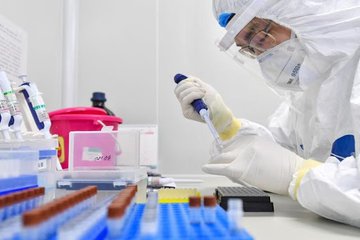
Virologists working in the lab


Senior members of the UK government have become less skeptical of the fringe theory that the coronavirus pandemic came from a lab in Wuhan, China, the original epicenter of the outbreak, high-ranked sources told the Daily Mail.

A member of Cobra, the emergency committee led by Prime Minister Boris Johnson, told the paper that while it’s still believed that the virus originated from animals, intelligence reports have not ruled out the possibility that the deadly illness was man-made.

“There is a credible alternative view [to the zoonotic theory] based on the nature of the virus. Perhaps it is no coincidence that there is that laboratory in Wuhan. It is not discounted,” the unnamed source told the British paper.

Rumors that the Chinese authorities had something to do with the outbreak have been solely based on the fact that Wuhan is home to the Institute of Virology. 

The facility, which is believed to have the most advanced labs in China, is located a dozen kilometers from the wildlife market that was pinpointed by Beijing as the source of the pandemic. Experts at the institute were the first to suggest that the disease had been transmitted to humans from bats.

Suggestions that COVID-19 was man-made were thought to be mere conspiracy theories unsupported by any actual proof, but it has now emerged that this possibility was discussed at the highest level in the UK.

Some experts have put forward the theory that the virus may have accidentally leaked from the lab. Professor Richard Ebright of Rutgers University’s Waksman Institute of Microbiology told the Mail on Sunday that, while COVID-19 is clearly not a bioweapon, it could have escaped from the facility by accident.

Ebright claims to know that the Chinese virologists employed insufficient security measures during their studies, creating a situation in which “virus collection, culture, isolation, or animal infection would pose a substantial risk of infection of a lab worker, and from the lab worker then the public.”

The British suspicions echo those of their allies in the US, where Washington has alluded to China’s involvement in the outbreak on many occasions. President Donald Trump has been criticized for referring to Covid-19 as “the Chinese virus,” while one White House official also reportedly labeled the disease ”Kung Flu."

Beijing’s diplomats responded by suggesting that the coronavirus was not of Chinese origin and could have been brought to Wuhan by the US military.

Tehran also chipped in, with Islamic Revolutionary Guard Corps chief, Hossein Salami, suggesting that Covid-19 was “possibly” a biological attack by the Americans against China and Iran, which then spread around the globe. 

However, the international blame game was never backed by any fact, with politicians always leaving space for debate in their assumptions.

Think your friends would be interested? Share this story!
Biafra and World News

China's exports of key medical supplies rise to $1.5 BILLION amid global shortage of anti-virus gear


     Published on Sunday, April 05, 2020 @ 17:30 CET
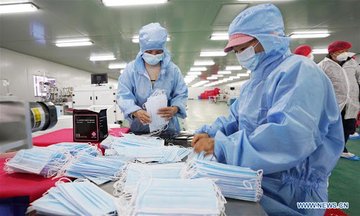
Chinese N95 mask factory

As the coronavirus landed in Europe and the US, the former epicenter of the outbreak, China, has exported to other countries medical supplies worth $1.45 billion (10.2 billion yuan) to battle the deadly pandemic.
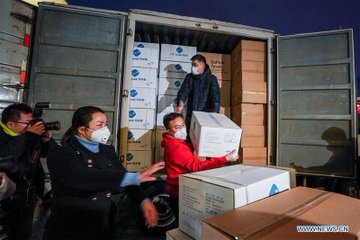
The key supplies, including billions of masks, millions of protection suits and infrared temperature detectors, as well as 16,000 units of ventilators, were sent overseas in one month from March 1 to April 4, the country’s General Administration of Customs announced on Sunday, according to state-linked outlet Global Times.
According to Chinese Ministry of Commerce, exports of medical supplies have been increasing and the government is not going to impose any restrictions on the vital shipments. As of Saturday, 54 countries and 3 international organizations inked commercial procurement contracts for medical supplies with Beijing.
Apparently reacting to the some reports that the European countries received faulty medical supplies, the ministry said that Chinese producers caught sending medical goods with quality problems will face “severe” punishment. 
ALSO ON RT.COMChina getting back to business as worst of coronavirus outbreak in country appears to be over
China became the first country to be hit by the novel coronavirus at the end of last year. The virus was later recognized pandemic as it rapidly spread across the globe, with more than 1.2 million cases and nearly 65,000 deaths worldwide as of Sunday. The US is currently the worst affected nation by the number of cases, with more than 300,000 infections, and over 8,500 fatalities.
EU countries have been fighting shortages of necessary medical devices and protective equipment which can potentially expose medical staff to higher risks of getting ill and further deteriorate the situation. Documents obtained by Reuters in March showed that the regional suppliers could cover only ten percent of the demand. The US is also suffering from shortages of medical gear, and has been even diverting shipments of vital protective masks from its allies.
Biafra and World News
Business: Africa in looming debt crisis, China could be responsible  

      | Published Tuesday, November 06, 2018 | 15:55 GMT


Africa is facing a looming debt crisis, say leading development economists.
"Almost 40% of sub-Saharan African countries are in danger of slipping into a major debt crisis" according to the Overseas Development Institute, ahead of a major conference on debt being held in London this week.
And the relationship between African nations and China is often seen as a significant part of the problem.
Its critics say that major infrastructure projects carried out by Chinese companies in Africa are too expensive, and burden the host countries with enormous debts they can't hope to repay.
The Chinese government is adamant that its economic relationships with African countries are mutually beneficial and rejects suggestions that it is using debt to expand global influence.
So is China really responsible for Africa's growing debt burden?

Africa's debt burden

The International Monetary Fund (IMF) has recently warned that Africa is heading towards a new debt crisis, with the number of countries at high risk doubling over the past five years.
The World Bank now classifies 18 countries as at high risk of debt distress, where debt-to-GDP ratios surpass 50%.
ADVERTISEMENT
The total amount of external debt for the continent is estimated at $417 billion.
Around 20% of African government external debt is owed to China, says the Jubilee Debt Campaign, a charity which campaigns for the cancellation of poor countries' debt.
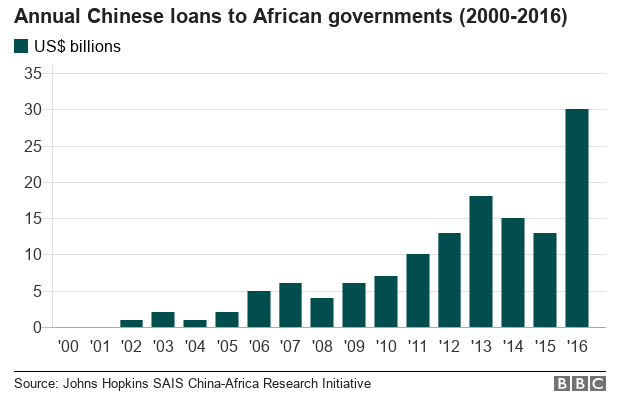
This makes China the largest single creditor nation, with combined state and commercial loans estimated to have been $132 billion between 2006 and 2017.
A further 35% of African debt is held by multilateral institutions such as the World Bank, with 32% owed to private lenders.
Chart showing growth of China's loans to African governments
There's one important caveat: this data is hard to verify. "China is not a member of the OECD (Organisation for Economic Cooperation and Development) and they do not participate in the OECD's Creditor Reporting System," said Christina Wolf, an economics expert at Kingston University. But China has pledged to invest $60bn in Africa by the end of this year.
Media captionChina is set to have invested $60bn in Africa at the end of 2018

Countries in deepest debt to China

Most of China's loans to Africa go into infrastructure projects such as roads, railways and ports.
In 2015, the China-Africa Research Initiative (CARI) at John Hopkins University identified 17 African countries with risky debt exposure to China, potentially unable to repay their loans.
It says three of these - Djibouti, Republic of Congo and Zambia - remain most at risk of debt distress derived from these Chinese loans.
In 2017, Zambia's debt amounted to $8.7 billion - $6.4 billion of which is owed to China.
For Djibouti, 77% of its debt is from Chinese lenders. Figures for the Republic of Congo are unclear, but CARI estimates debts to China to be in the region of $7bn.
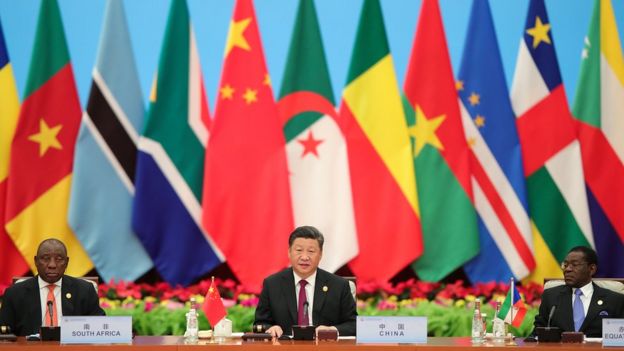
China-Africa summitImage copyrightGETTY IMAGES
Image captionPresident Xi with South African President Cyril Ramaphosa (left) and Equatorial Guinea's President Teodoro Obiang.

Fewer strings attached?

Compared to institutions such as the IMF, World Bank and Paris Club (a group of 22 creditor nations not including China,) loans from China are seen by some as much quicker, cheaper, and come with fewer strings attached.
The United States in particular has been highly critical of China's approach.
Earlier this year, ahead of a visit to Africa, the then US Secretary of State, Rex Tillerson, said China's lending policy to Africa "encouraged dependency, utilised corrupt deals and endangered its natural resources".
China's response was forthright. Its ambassador in South Africa, Lin Songtian, said China was proud of its influence in Africa and that Mr Tillerson's comments were part of a smear campaign by the United States.
"China is just like any other lender," says Gyude Moore, a former Liberian Government official, and "China's strategic interest is in African countries paying back debts."
There are many examples of China supporting programmes to help with debt repayments, says Mr Moore, who's currently a visiting fellow at the Centre for Global Development.
And ultimately, it is up to African nations themselves to accept or reject Chinese loans.
But a severe lack of infrastructure, and the desperate need for modern transport links in many of the poorest countries, make China's ready offer of substantial loans for such projects often difficult to turn down.
And what's clear is that Africa's debt problem is far wider than its relationship with China.


However, China's increasing involvement with the continent and its commitment to providing loans for large-scale projects, mean that any solution to Africa's debt problems must address its relationship both with Beijing and with private Chinese companies operating on the continent.
-BBC News